Resources: Blended and Simulation Learning
The future of learning is Simulation Learning in a Blended environment. A simulation lets you learn by doing in a safe controlled space. All airline pilots train in an aircraft simulator. The simulators are so good the pilots can get certified on new aircraft types without having to actually fly that new aeroplane. Simulations of new corporate computer systems can be a very effective way of training hundreds, if not thousands of people, before the new system goes live.
The COVID pandemic required us to isolate at home. The lock-downs varied from country to country in their severity, but essentially we became separated from each other for extended periods of time. We had to learn how to work and study remotely. Life had to go on and technology provided a way to communicate over computer networks. It was a difficult time. It forced us to think about our relationships with other people, how we needed them and what we got from them.
Young people of school age seemed to be particularly impacted. They were separated from their friends, and that COVID generation effectively lost a couple of years of social development. But I think we learned some valuable lessons, or at least had some things we already knew confirmed in a dramatic way.
Remote study does have real benefits. People can move at their own pace. They can study at times that suit them. They can repeat classes as often as they want. They can look for other sources of information to help with their learning. But, as humans, learning requires us to interact with others to really grasp whatever it is we are trying to learn. Conversation, other points of view, explanations give us insights we simply can't don't get on our own. And other people can make a situation fun or exciting. These papers describe simulation learning and talk about the way to blend computer based learning with instructor lead learning.
Paper
Blended learning: rich experiences from a rich picture
June 2003
Blended learning – the combination of instructor-led and e-learning methods – is probably one of the most successful training approaches used today. Not only does it provide all the benefits of elearning, including cost reductions, time efficiencies and convenience for the user, but it also provides that essential one-onone, personal understanding and motivation that only a human instructor can provide.
AITD Training and Development in Australia
Rupert Brown
Download here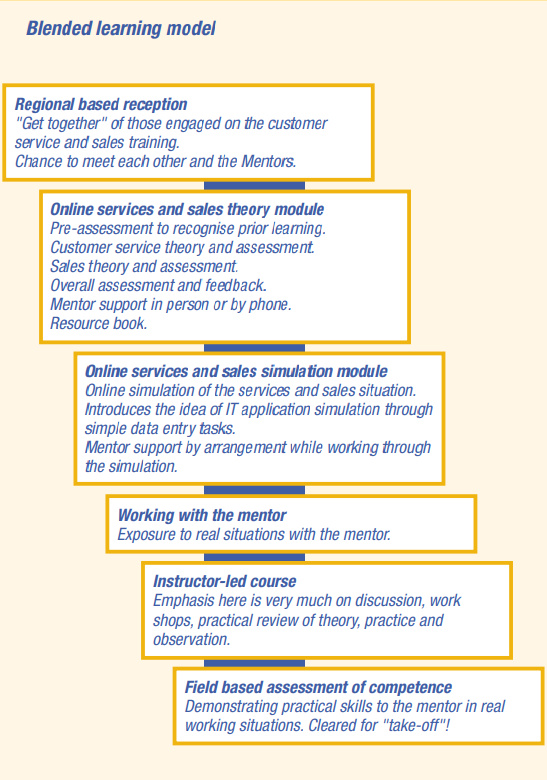
Paper
Simulation learning: a powerful tool
August 2002
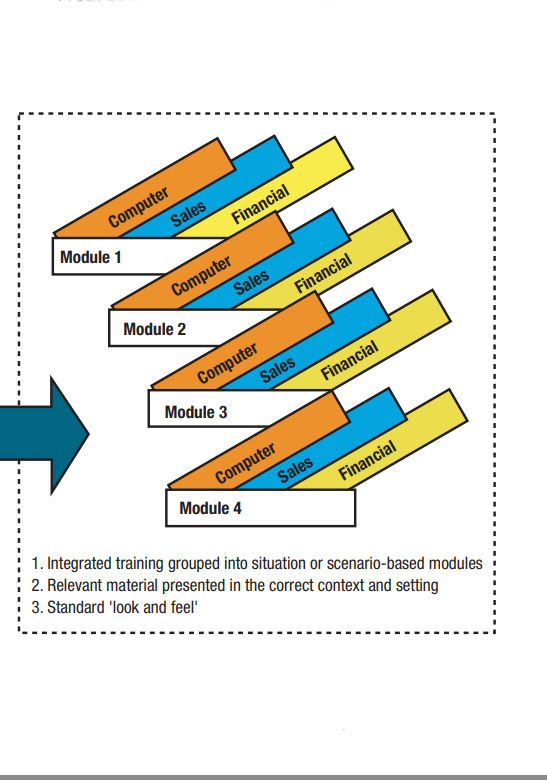
Simulation learning is based on the same technology as e-learning, but has one key differentiator – simulation is the primary learning and assessment tool. The aim of a simulation learning product is to create an emotional response in the user.
Software Engineering Australia
Rupert Brown
Download here